
From Edge Intelligence to Agentic AI for the Intelligence of Things
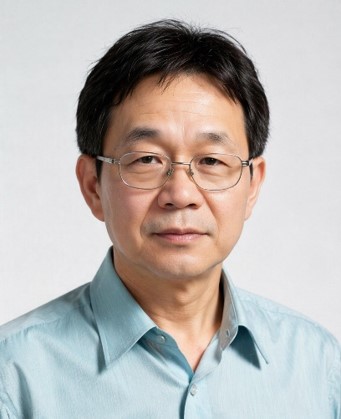
Rung-Ching Chen
Chaoyang University of Technology, Taichung, Taiwan
Dr. Rung-Ching Chen is a Distinguished Professor in the Department of Information Management at Chaoyang University of Technology, Taichung, Taiwan. He received his B.S. degree from the Department of Electrical Engineering and his M.S. degree from the Institute of Computer Engineering, both at the National Taiwan University of Science and Technology, Taipei, Taiwan. He received his Ph.D. degree in 1998 from the Department of Applied Mathematics, Computer Science Section, at National Chung Hsing University, Taiwan. He served as President of the Taiwanese Association for Consumer Electronics from December 2012 to December 2014. He has been a Fellow of the Institution of Engineering and Technology (IET) since July 2011, and has served as Executive Director of the IET Taipei Network and as a member of IEEE-related steering committees. He has also served on review committees of Taiwan's National Science and Technology Council (NSTC) in the field of artificial intelligence.
Abstract:
The rapid growth of the Internet of Things is transforming connected devices into intelligent systems capable of real-time perception, decision-making, and action. This keynote presents the evolution from cloud-centered IoT to edge intelligence and Agentic AI for the Intelligence of Things. Edge intelligence enables AI models to process sensor, image, and video data near their sources, reducing latency, communication overhead, and privacy risks. Federated learning further allows distributed IoT devices and vehicles to collaboratively improve models without directly sharing local data. Building on these capabilities, Agentic AI introduces autonomous perception, reasoning, planning, action, and continuous learning into IoT environments. Applications in smart cities and intelligent transportation will be presented, including road-environment recognition, traffic-sign detection, driver monitoring, pedestrian-intent prediction, and proactive traffic-risk assessment. The keynote will also discuss the integration of edge devices, intelligent agents, and cloud services, together with key challenges in reliability, cybersecurity, privacy, and responsible autonomous decision-making. These technologies provide a pathway from connected things to adaptive, collaborative, and sustainable intelligent systems.
Resilient UAVs in the AI of Things: From Fault-Tolerant Flight Control to Vision-Based Post-Typhoon Damage Assessment
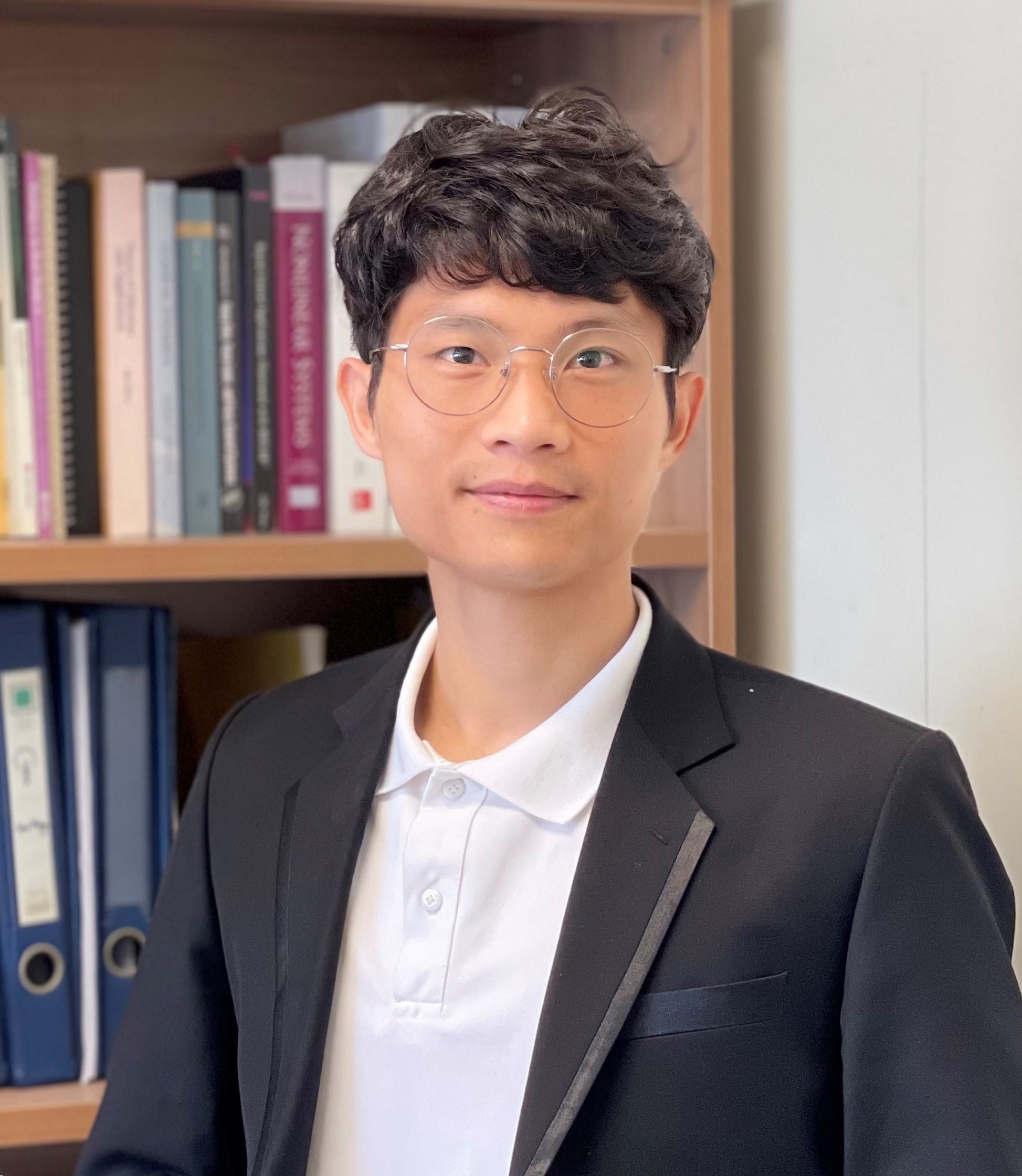
Nguyen Xuan Mung
Department of Aerospace Engineering, Sejong University, Seoul, Republic of Korea
NGUYEN XUAN MUNG is currently a professor with the Department of Aerospace Engineering at Sejong University, South Korea. He received a B.S. degree in mechatronics from Hanoi University of Science and Technology, Hanoi, Vietnam, and the M.S. and Ph.D. degrees from Sejong University, both in aerospace engineering. His research interests include unmanned aerial vehicles (UAV), spacecraft, autonomous vehicles, automation, and robotics.
Abstract:
Unmanned aerial vehicles (UAVs) are increasingly deployed as autonomous, sensor-equipped nodes within the Internet of Things, extending IoT connectivity into the air and to disaster sites that are otherwise difficult to access. Realizing this vision requires UAVs that are not only intelligent but also resilient: they must keep flying safely when a sensor drifts or an actuator fails, and they must extract actionable knowledge from raw imagery once deployed. This talk presents two complementary strands of AI-of-Things research addressing exactly these needs. The first examines deep-learning and reinforcement-learning-based fault-tolerant control for UAVs, in which onboard models detect, isolate, and compensate for actuator and sensor faults in real time, allowing a vehicle to maintain stable, safe flight and complete its mission under partial system failure. The second turns to the UAV as a mobile visual sensor for disaster response, using deep convolutional neural networks to automatically detect and classify structural and infrastructure damage from aerial imagery captured after typhoons, enabling faster, more objective assessment than manual inspection. Together, these threads show how embedding AI directly into UAV platforms, from low-level flight control to high-level scene understanding, turns individual vehicles into trustworthy, self-diagnosing, and perceptive "things" within a larger IoT ecosystem for disaster resilience and infrastructure monitoring. The talk closes with open challenges in certifying AI-based fault tolerance and scaling vision-based damage detection to real-time, swarm-level disaster response.